
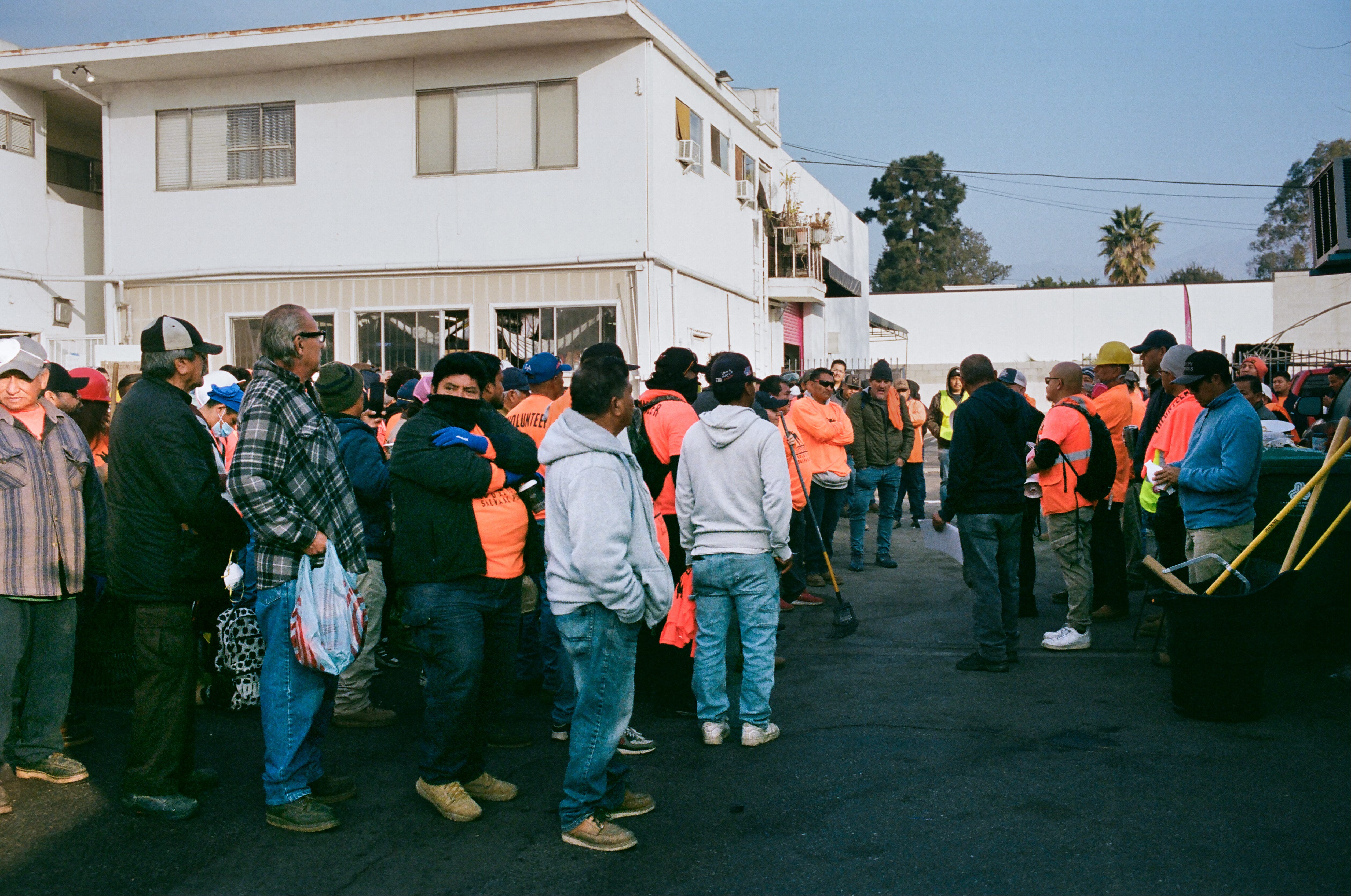
Jose Madera is director of the Pasadena Community Job Center, which was a main hub for relief efforts during the Eaton Fire.
“¡Solo el pueblo salva al pueblo!” “¡Solo el pueblo salva al pueblo!”
A group of workers in orange shirts led this mesmerizing chant in a room filled with Pasadena City Council members, directors of city departments and nonprofits, school board members and community members.
It started when Sinaloa, as one day laborer is nicknamed, held his left fist in the air and chanted with pride in his thunderous voice. The crowd joined him, standing and cheering on the jornaleros. This was how the 2025 Pasadena’s State of the City event started when Vice Mayor Jess Rivas thanked the Pasadena Community Job Center and the Fire Relief Brigade in her opening remarks. This was one of the many moments the Brigade was recognized and applauded.
The Fire Relief Brigade was created at the Job Center on Jan. 8, the day after the Eaton Fire began. The fire took the lives of 19 community members in Altadena and Pasadena and destroyed or damaged more than 10,000 structures. Thousands of homes were left contaminated by ash, smoke and other toxic pollutants.
When workers gathered at the Job Center that first day, everyone had already been affected by the dangerous and rapidly spreading fire. Some had lost the apartments they had lived in for decades, or had friends or family members who had lost everything. They knew the flames were destroying homes they had built, painted, landscaped and renovated, stores and business they had supported, the community they lived and worked in.
They stood in a circle in the middle of the room, put their tools in the middle, and asked one another: How do we support this community which the Job Center has been part of for over 20 years?
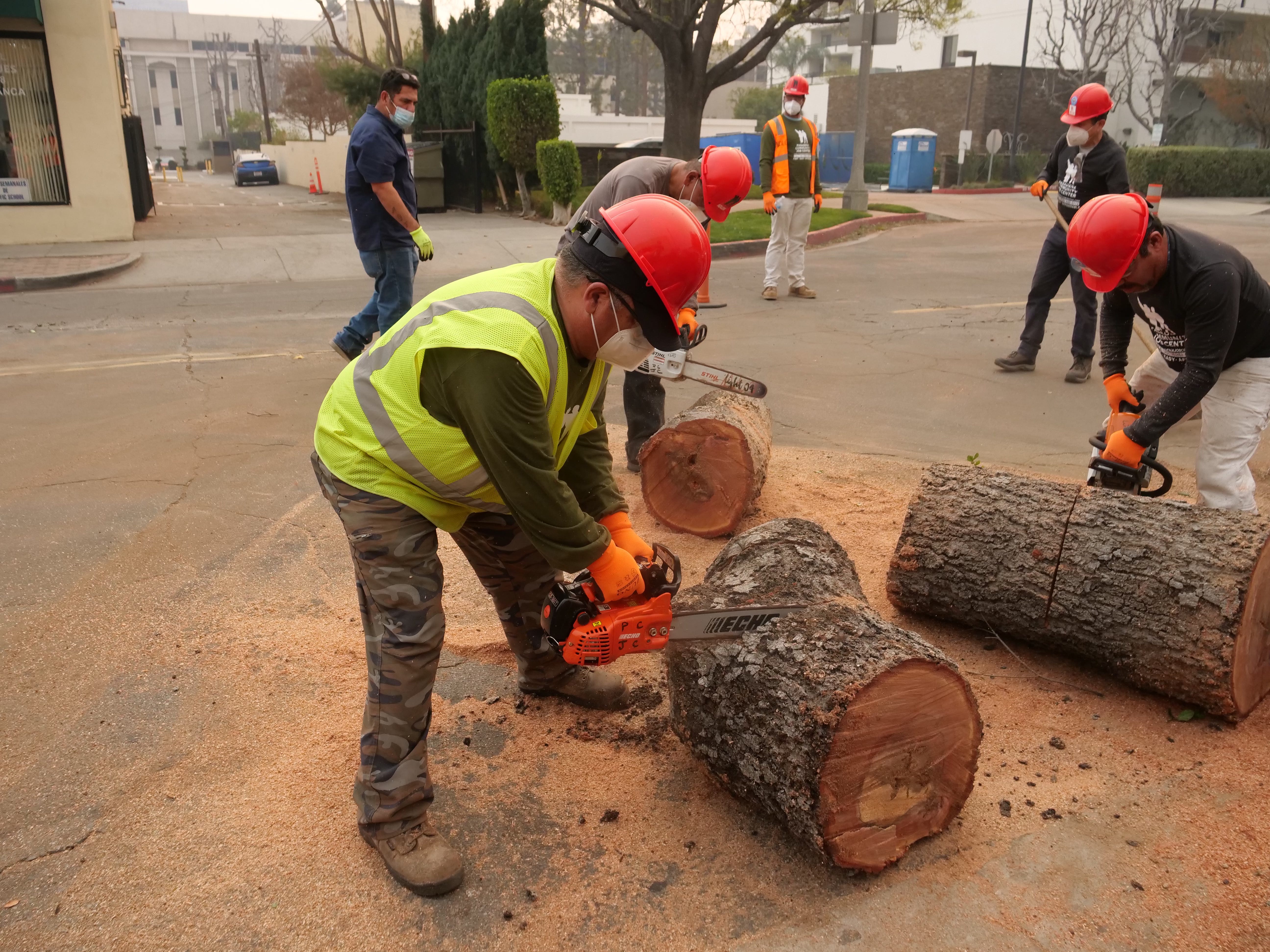
Outside, a tree had fallen on the road, blocking traffic. Firetrucks and people evacuating were driving around it. The workers said: Well, we have chainsaws, let’s go cut it up. And they did. After they were done cutting and moving the branches to the sidewalk, they looked further and saw another fallen tree up the street. Then they saw another tree, and more debris.
They kept working until sunset. They gathered again and said, Let’s do it again tomorrow.
This is how the Fire Relief Brigade was created. The next day, we put out an announcement for volunteers and people came. Fifty people came, and then 100, and it just kept growing.
Street by street, crews led by workers went to clean up fallen trees and branches. In the first three weeks, more than 3,000 tons of green waste was collected. As the workers went to every corner of Pasadena, they never asked the homeowners they helped who they had voted for, what their political party was, or whether they had papers. They just went street by street, supporting their community.
The City of Pasadena had announced that it would take at least eight weeks to remove all debris from the streets. The Fire Relief Brigade workers and volunteers finished the job in four.
But the longer process of cleanup, recovery and rebuilding after the Los Angeles fires is still going on. The health and safety of workers are vital to that work. During the cleanup, NDLON was able to train 175 day laborers under OSHA guidelines in how to work safely in disaster areas. Workers learned how to correctly use personal protective equiment and how to stay safe from contamination and construction hazards. I a partnership with the relief organizations CORE, Fire Poppy Project and All Hands and Heart, NDLON provided 40 workers with training in indoor remediation of fire-contaminated homes.
As jornaleros have been remediating homes in Altadena, Pasadena and the Palisades, they are also building community. Each damaged apartment, each contaminated home, is a place with stories that need to be protected and perserved. After each remediation visit, the homeowners or tenants share stories with the workers and thank them for their service.